How Do I Know If My Deck Actually Needs Repairs?
Before you figure out who's fixing it, you need to know what's actually wrong. A lot of Colorado homeowners let deck problems slide until they've gotten significantly worse than they needed to be. Our climate up here is genuinely brutal on wood structures — wide temperature swings, intense UV exposure at elevation, heavy spring snowmelt, and hailstorms all beat the hell out of a deck year after year.
Walk your deck at least once a year — every spring is ideal, right after the freeze-thaw cycle does its damage. Here's what to look for:
- Faded, peeling, or flaking stain or sealant
- Surface splinters and minor cracking along the grain
- Loose screws or nails popping through the surface
- Minor discoloration or mildew staining
- One or two soft spots that haven't spread
- Boards that flex excessively when you walk on them
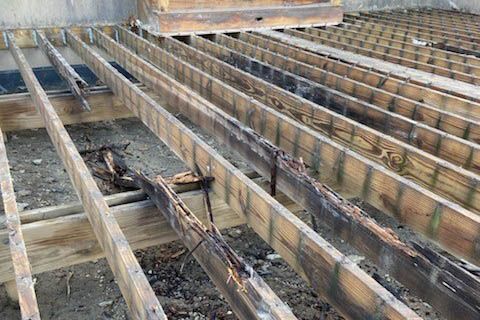
- Rot spreading through multiple boards or into the framing
- Wobbly or loose railing posts — serious safety issue
- Any movement in the ledger board
- Sagging or uneven deck surface across a large area
- Cracked or leaning support posts
Not Sure What You're Looking At?
We do free on-site deck inspections across the Denver metro and mountain communities. We'll give you a straight answer on what needs fixing, what can wait, and what you could realistically tackle yourself.
What Deck Repairs Can I Do Myself?
We're a deck building company, and we're about to tell you some stuff you can honestly handle on your own. Being straight with you is worth more than trying to sell you something you don't need. Here's where DIY deck repair is totally reasonable:
Swapping Out a Bad Board or Two
Replacing a single bad board — or a small handful of isolated boards — is a reasonable weekend project if you're comfortable with a drill and a circular saw. The critical step most people skip: before you commit, pull up the board and look at the joist underneath. If that joist is spongy, dark, or has any give to it, you've got a bigger problem than just the surface board. Don't cover up a structural issue with new decking.
Recoating, Staining, and Sealing
This is the most common DIY deck task and it's genuinely doable. Rent a power washer, clean the surface thoroughly, let it dry for a solid 48 hours minimum — don't rush this part — and apply a quality stain or sealant. The biggest mistake homeowners make is applying stain too soon after washing, or skipping the cleaning entirely. Stain won't bond to dirty or damp wood. Full stop.
Tightening Loose Fasteners
If screws are backing out, drive new ones nearby or swap in slightly longer replacement screws. Easy fix, and an important one — loose fasteners create tripping hazards and accelerate board movement over time.
Cleaning Mildew and Surface Staining
A quality deck cleaner — look for products with sodium percarbonate for wood decks — plus a stiff-bristle brush will knock out most mildew, tannin staining, and grey weathering. This is 100% in your wheelhouse and worth doing every couple of years at minimum.
What Deck Repairs Should You Never DIY?
Alright, here's where we stop being polite. Some deck repairs that homeowners attempt themselves go sideways in ways that are genuinely dangerous — and we're not just talking about a bad-looking result. We're talking structural failures, injuries, and insurance headaches that are way harder to deal with than just calling a contractor from the start.
Structural Framing and Joist Repairs
If your deck joists are rotted or compromised, this is not a YouTube tutorial situation. Joists are what hold the entire deck surface up. An incorrect repair here can result in a deck collapse. Colorado code requires specific lumber grades, spans, and fastener types for structural framing — this is not the place to wing it.
Ledger Board Issues — Why This One's Serious
The ledger board is the piece of lumber that connects your deck directly to your house. If it's rotting, pulling away from the structure, or improperly flashed — meaning water is getting behind it — you have a serious problem. Ledger failures are one of the leading causes of deck collapses nationally. This is a licensed-contractor job. No exceptions.
Post and Footing Repairs
If a support post is showing rot, cracking, or shifting, the footing it sits on needs to be inspected at the same time. Incorrect post sizing or footing depth is both a code violation in Colorado and a genuine safety hazard. Deck footings need to be below the frost line — typically 36 inches in the Denver area. If someone poured shallow footings on your existing deck, that needs a pro's eyes on it.
Railing System Repairs
People underestimate railings constantly. A wobbly railing post isn't just annoying — it's a safety hazard, especially with kids or elderly family members on the deck. Railings need to meet specific load requirements. One that looks fine but isn't properly anchored to the framing can fail under pressure in a way that causes serious injury.
Anything Involving the Ledger Connection or Waterproofing
Where your deck meets your house is one of the most critical junctions in the entire structure. Improper flashing at the ledger is how moisture gets into your house framing — which opens up a whole other category of expensive, painful problems. If you're not 100% certain what you're doing here, call someone who is.
| Repair Type | Who Should Do It | Why |
|---|---|---|
| Full deck restain / reseal | DIY Friendly | Surface-only task, no structural risk |
| Replace 1–3 isolated boards | DIY Friendly | Manageable if framing below is solid |
| Tighten loose screws and fasteners | DIY Friendly | Simple, low-risk maintenance task |
| Clean mildew and surface staining | DIY Friendly | Standard maintenance, no special tools |
| Railing post wobble or movement | Proceed Carefully | Safety hazard — get an inspection first |
| Multiple soft or rotted boards | Proceed Carefully | May indicate joist damage below the surface |
| Joist repair or sistering | Call a Pro | Structural — requires correct lumber and spans |
| Ledger board repair or replacement | Call a Pro | Leading cause of deck collapses when done wrong |
| Post or footing repair | Call a Pro | Code requirements, frost-line depth, load math |
| Full structural deck repair | Call a Pro | Multiple systems involved — not a DIY situation |
How Do You Find a Trustworthy Deck Contractor in Colorado?
Whether you're in Littleton, Castle Rock, Greenwood Village, Evergreen, or anywhere in between — finding a deck builder you can actually trust matters. Here's what to look for and what to ask before you hire anyone.
Questions to Ask Any Contractor Before You Hire Them
- Are you licensed and insured? In Colorado, deck contractors should carry both general liability and workers' comp insurance. Don't take their word for it — ask to see the certificate of insurance.
- Do you do an on-site inspection before sending an estimate? Any contractor trying to quote a structural repair over the phone or from photos is guessing. Insist on a walkthrough. At Deck Doctor, we come out, walk the space, and follow up with a detailed written estimate — usually within about a week of the on-site inspection.
- Can you provide references from similar repair work? Ask specifically for repair jobs, not just new builds. Repair work is a different skill set and requires honest assessment over salesmanship.
- What warranty do you offer on your repair work? Reputable contractors stand behind what they do. At Deck Doctor, we back our work with both manufacturer warranties and our own labor guarantee.
- Will you tell me if the repair isn't worth doing? A good contractor will sometimes tell you that a repair doesn't make sense and that replacement is the smarter move. If someone is pushing a big repair on a deck that should clearly be replaced — or vice versa — get a second opinion.
32+ Years of Colorado Deck Repairs. Done Right.
Deck Doctor Inc. is a family-owned, multi-generational company based in Golden, CO. We're licensed, insured, and we'll give you the straight truth about what your deck actually needs — even if that means telling you to grab a brush and do it yourself.
When Is It Time to Stop Repairing and Just Replace the Deck?
This is the question we get asked more than almost any other. The honest answer? It depends on the scope of the damage, the age of the deck, and what your goals are for the space. There's no universal answer — but there are some clear signals.
Signs Your Deck Has Crossed the Repair Threshold
- The deck is 20+ years old and was built with lower-grade lumber
- Multiple systems are failing at the same time — framing, railings, and surface boards
- You want to expand the footprint or change the layout anyway
- The deck doesn't meet current building code, especially older ledger connections
- You've already had the same areas repaired more than once
When Repair Still Makes the Most Sense
- Damage is isolated to a specific section of boards or one railing area
- The underlying structure is solid — just the surface needs attention
- The deck was well-built and is under 12–15 years old
- You're planning to sell the home soon and just need it to look and function well
Because your backyard deserves nothing less than the best.