Steel Deck Framing in Colorado: Is It Worth The Cost?
Steel Deck Framing in Colorado: Is It Worth the Cost?
If you've gotten a deck quote in Colorado in the last couple years, there's a good chance somebody's mentioned steel framing — and your wallet probably did a backflip when you saw the price difference. Steel deck framing isn't cheap. It runs anywhere from 20% to 75% more upfront than traditional pressure-treated lumber. So why is it suddenly everywhere? And more importantly: is it actually worth the extra money for your situation?
The short answer is "it depends." The longer answer involves wildfire codes, Colorado's brutal weather swings, the lifespan of modern pressure-treated wood (spoiler: it's not great), and what you actually plan to do with your deck for the next 25 years. Let's break it all down so you can make the call without getting sold something you don't need — or skipping something you actually do.
[Image suggestion: Close-up of a steel deck frame partially built, showing joists and ledger — search "steel deck framing joists" or "metal deck frame construction"]
What Steel Deck Framing Actually Is
Before we get into whether it's worth it, let's make sure we're talking about the same thing. When folks say "steel deck framing," they usually mean cold-formed galvanized steel beams and joists that replace the pressure-treated 2x8s, 2x10s, and 2x12s in a traditional wood deck. Brands like Fortress Evolution, Trex Elevations, and Decksteel make complete systems — joists, beams, ledgers, hardware, the whole package.
The decking surface on top? That stays the same options as always: composite, PVC, fire-retardant wood, or whatever you want. Steel is just for what's underneath, holding everything up.
How It Actually Goes Together
Steel framing systems use light-gauge galvanized steel — usually 14 to 18 gauge — coated to resist rust. The pieces are assembled with screws or brackets, creating a metal skeleton under the deck boards. The interlocking joist and ledger system provides a straightforward installation process that looks and feels like working with wood.
The screws are self-tapping, so you don't need to pre-drill. You do need a metal cutting blade for your circular saw. And honestly, if you've never seen one go up before, you'd be surprised how fast a crew that knows what they're doing can put one together. We're talking faster than wood once they're dialed in — like 34% fewer labor hours in some side-by-side comparisons.
Why It's Suddenly Everywhere in Colorado
Three reasons: wildfire codes, lumber quality going downhill, and Colorado weather being absolutely savage on wood.
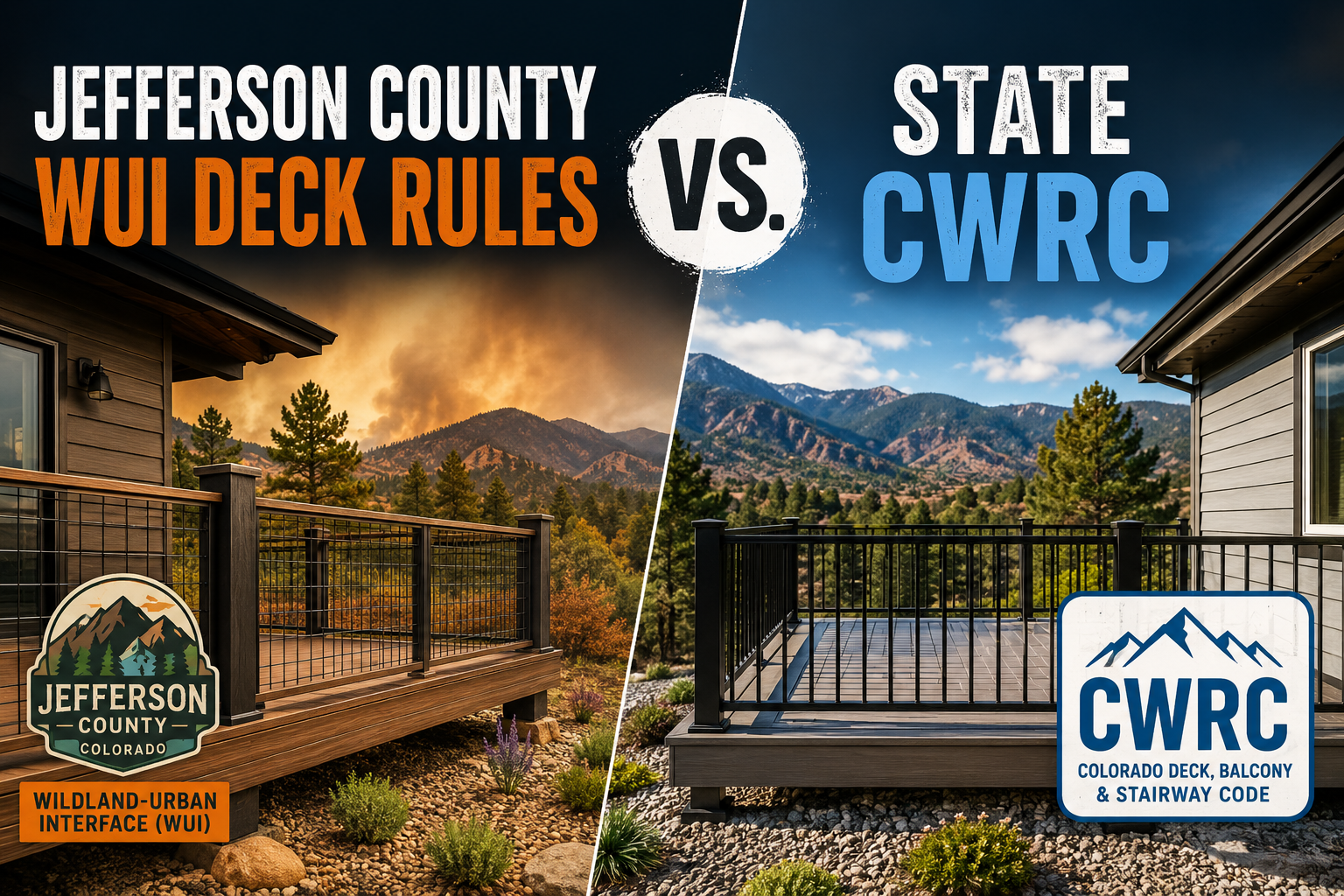
Wildfire codes is the biggest driver. The new Colorado Wildfire Resiliency Code (CWRC) and stricter local rules in places like Jefferson County are starting to require non-combustible substructures in higher-risk WUI zones. Steel is the easiest way to meet those rules.
Lumber quality has dropped a lot. Today's pressure-treated wood comes from faster-growing trees with wider, weaker growth rings. The wood that arrives at the jobsite warps, cracks, and twists way more than what your dad's contractor was using 30 years ago.
Colorado weather is brutal on wood. Intense UV at altitude, freeze-thaw cycles, dry summers, sudden snow loads — wood expands, contracts, cracks, and rots faster here than just about anywhere.
Wondering if your project actually needs steel framing or if wood will work fine? It depends a lot on your location, your deck design, and your long-term plans. We do free consultations and tell you straight up what makes sense for your situation. [Schedule a no-pressure consultation today.
The Real Cost Difference: Breaking Down the Numbers
Let's stop dancing around it and look at actual numbers. Here's what you can expect when comparing steel and pressure-treated wood for a typical 320-square-foot Colorado deck.
Material Costs Up Front
The total material cost difference between steel and wood is around 21%, but that's only the materials. When you spec out a complete framing system, the steel framing system can cost about 275% more than the traditional wood framing materials.
Yeah, you read that right. The steel itself, plus specialty screws and connectors, can drive up the price significantly. On a 1 5/8″ x 8″ x 12′ – 18-gauge steel joist you can expect to pay around $95 per joist compared to $20-$30 for an equivalent treated 2x8.
For a standard 16x20 deck (320 sq ft), the upfront framing cost difference works out to roughly $2,100-$2,600 more for steel.
Total Project Cost Is the Real Number
Here's where it gets interesting. Because steel installs faster, doesn't need joist tape, and goes together flatter, the labor costs come down. When everything's added up, the total project cost difference to the contractor is only 6%.
That 6% number is what you, the homeowner, should actually focus on. On a $25,000 deck project, that's roughly $1,500 more for steel framing. Not nothing, but not the bank-breaker some people make it out to be.
Hidden Costs of Wood You Might Not Think About
Now let's look at year 15 down the road. Your pressure-treated lumber frame might need sister joists for sagging sections, replacement of rotted rim joists, and reinforcement where connections have weakened. Each maintenance cycle costs $300-800 in materials and labor if you DIY, $800-1,500 if you hire it out.
Today's wood frame decks may only last for 7-10 years before serious structural issues develop. That doesn't mean they fall down — but they start needing real money put into them. Sister joists. Rim joist replacements. Hardware corrosion fixes.
Steel framing, on the other hand, basically just sits there for 25-50 years. Galvanized steel is engineered to remain structurally sound for 50 years or more. The Fortress Evolution system comes with a 25-year warranty.
When Steel Pays Off (and When It Doesn't)
The math works for steel if:
- You plan to stay in your house 15+ years
- You're using premium composite or PVC decking ($8-12/sq ft) where the surface will outlast a wood frame
- You're in a WUI zone where it might be required anyway
- Your deck design is complex with multi-levels, cantilevers, or curves
The math doesn't work for steel if:
- You're flipping the house in 2-3 years
- Budget is genuinely tight and a wood deck still gets the job done
- It's a small ground-level deck where wood's weaknesses don't matter as much
- You're in a non-WUI area with no fire-hardening pressure
[Image suggestion: Side-by-side comparison shot of wood vs steel deck framing — search "wood vs steel deck framing comparison" or "steel joist deck"]
When Colorado Code Requires Steel (Whether You Like It or Not)
Here's the deal that a lot of homeowners are running into right now: in some Colorado jurisdictions, you don't actually have a choice. Steel isn't an upgrade — it's the only option that'll pass inspection.
WUI Zones and Non-Combustible Substructure Requirements
The new Colorado Wildfire Resiliency Code (CWRC), effective statewide by July 1, 2026, has specific rules about deck substructures in higher-risk areas. In many high-risk ignition zones, traditional wood framing is not allowed for new builds. A Class A non-combustible substructure is required, and steel framing is the primary material used to satisfy this standard.
It's not that wood is suddenly illegal everywhere. The rules are tiered:
- Low Fire Intensity (yellow) zones: Wood framing is generally still okay if you meet other Class 1 hardening rules
- Moderate Fire Intensity (orange) zones: Wood framing may need to be fire-retardant-treated AND properly enclosed
- High Fire Intensity (red) zones: Steel or other non-combustible substructure is often the only path
Local Codes That Already Require It
Jefferson County, parts of unincorporated areas in the foothills, Eagle County, Summit County, and several mountain communities have rules that already require non-combustible substructures in certain zones. Jefferson County's new Wildfire Resiliency Code takes effect July 1, 2026, and structure hardening requirements include roofing classified as Class A, siding and deck framing materials that limit fire ignition.
Translation: if you're in Jeffco's WUI overlay map and you're building a new deck or doing a substantial rebuild, expect steel framing to be on the table whether you wanted it or not.
The "Shall Be Class A" Trap
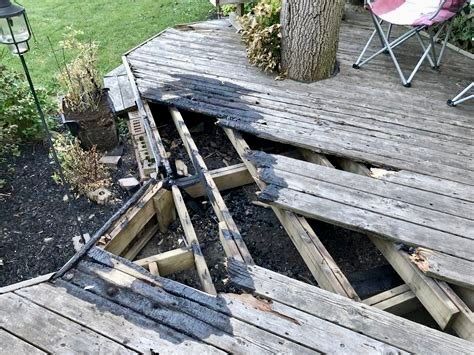
Some folks try to get around this by using fire-retardant-treated (FRT) wood for framing. That works in some zones — but in high-intensity areas where the substructure has to be Class A non-combustible, FRT wood doesn't meet the spec. Class A non-combustible specifically means it doesn't burn at all, period. Wood, even chemically treated, eventually burns.
If your inspector or building department is asking for "Class A non-combustible substructure," steel (or aluminum) is your answer.
Not sure what zone your property is in or what your local code requires?
We'll pull up your jurisdiction's WUI map, look at your specific lot, and tell you exactly what's required. No guessing, no expensive surprises mid-project. [Get a free property and code review.]
The Performance Benefits Beyond Fire Code
Even if you're not in a WUI zone where steel is required, there are some genuine performance reasons to consider it. These aren't sales pitches — they're real differences that show up in how your deck behaves over time.
Dimensional Stability (a.k.a. No More Warping)
This is probably the biggest day-to-day benefit. The steel profiles arrive straight and install flat — forget about planing and fighting twisted boards into place. Wood frames move as they dry, swell, and contract with moisture. That movement can telegraph through to your deck boards over time, causing waves and unevenness.
Anyone who's installed composite boards on a wood frame knows the headache. The frame moves, the boards stay put, and suddenly you've got gaps, popped fasteners, or wavy spots. Steel doesn't do that. It stays flat. Forever. Your $10/sq ft Trex boards stay flat forever too.
Insect and Rot Immunity
Steel is not an organic material and is impervious to insects. That means no carpenter bees chewing holes in your joists, no termites finding their way in, no rot, no fungal growth, none of that nonsense.
Pressure-treated wood is supposed to resist this stuff, but the newer treatments that don't contain arsenic have been showing signs of rot in as little as 10 years. Carpenter bees don't read the chemical treatment label — they just start chewing.
Span Capacity for Bigger, More Open Designs
Steel has a much better strength-to-weight ratio. This means you can run longer spans without intermediate posts, allowing for up to 50% greater joist spans while maintaining a stable foundation.
For homeowners who want a clean, open look — fewer posts cluttering up the under-deck space, longer cantilevers off the side, large open patio areas without support columns — steel makes designs possible that wood just can't pull off without getting weird.
Better Substrate for Premium Surfaces
Putting premium Trex or Azek boards ($8-12 per square foot) on a pressure-treated frame that'll need repairs in 15 years is questionable. You're pairing a 25-year surface with a 15-year structure.
If you're spending real money on the visible deck surface — composite, PVC, porcelain tile — it doesn't make a ton of sense to skimp on what's underneath. Tile decking specifically pretty much requires steel because tile cracks if the substrate moves at all.
[Image suggestion: Finished modern deck with composite boards showing clean lines and few visible posts — search "modern composite deck residential" or "open backyard deck design"]
The Honest Drawbacks of Steel Framing
I'm not gonna sit here and tell you steel is perfect. It's not. There are real downsides that don't get talked about enough in the marketing materials. If you're making the call, you should hear both sides.
Higher Upfront Cost (Period)
We covered this already, but let me say it again: steel costs more out of pocket on day one. If your budget is tight and the wood option still meets code, that extra $1,500-$3,000 might be better spent elsewhere on the project — better railings, premium decking, lighting, whatever matters more to you.
Don't let anyone shame you into steel if your situation doesn't justify it.
Not Every Contractor Knows How to Install It
Not every contractor has steel framing readily in stock, so it might need special ordering. More importantly, not every contractor has experience with it. Installation runs 25-30% slower for crews that don't know what they're doing.
A contractor doing their first steel deck is gonna make mistakes. Bad cuts. Wrong screws. Improper bracing. If you're going steel, find a builder who's done it before — and ask to see actual photos of completed steel deck projects, not just wood ones.
Rust Risk If the Coating Gets Damaged
Steel is more or less rust-proof as long as the galvanized or powder coating stays intact. But if it gets scratched — squirrels, weed whackers, hardware contact, rough handling during install — the bare steel underneath can rust over time. This is especially relevant in areas with high wildlife activity. It's not a deal-breaker, but it means you should pick a contractor who handles it carefully and uses touch-up paint where needed.
Permitting Delays in Some Areas
Some inspectors are unfamiliar with steel systems and may need manufacturer documentation showing code compliance. If your local building department doesn't see steel deck framing very often, expect your contractor to need to provide engineering letters, manufacturer specs, and load tables. This isn't usually a huge deal, but it can slow things down by a week or two during plan review.
It Looks Industrial Underneath
If you ever look up at your deck from below, steel looks like steel. Some people love that modern, clean industrial look. Other people prefer the warmer wood appearance. Most homeowners don't actually care because nobody hangs out under their deck staring at the joists, but it's worth mentioning.
Should YOU Get Steel? A Decision Framework
Okay, let's cut through all of it and make this practical. Here's how I'd think about whether steel is worth it for your specific situation.
Get Steel If Any of These Apply
- You're in a WUI zone that requires non-combustible substructure (no choice anyway)
- You're staying put 15+ years and want a deck that won't need structural work
- You're using premium composite/PVC boards ($8/sq ft+) that'll outlast wood framing
- You want a complex design with cantilevers, multiple levels, or curved sections
- You're using porcelain tile as your decking surface (steel basically required)
- You're already spending $30K+ on the project and the 6% extra is rounding error
- You hate maintenance and want a frame you genuinely never have to think about
Stick With Wood If Any of These Apply
- You're flipping the house within 5 years
- Budget is genuinely tight and you'd rather save the money
- It's a small ground-level deck where structural issues won't be a big deal
- You're in a non-WUI area with no fire code pressure
- You can't find a contractor with steel experience in your area
- You like the option of DIY repairs (way easier on wood)
When in Doubt, Ask the Right Questions
If you're sitting at the dining room table with a contractor and you're not sure what to do, ask these:
- Is my property in a WUI zone, and does that affect what's allowed?
- What's the cost difference for THIS project, in dollars, after labor?
- Have you built decks with this specific steel system before? Can I see one?
- What happens to the warranty on the deck boards if I use a wood frame?
- What's the realistic 15-year cost difference if I include maintenance?
A good contractor will give you honest answers. A salesy one will push whatever they make the most margin on.
Want a real, honest assessment of whether steel makes sense for your project?
We'll walk through the specifics of your property, your local code, your design, and your budget — then tell you what we'd actually recommend if it were our house. No pressure to go with the more expensive option if it doesn't make sense. [Schedule your free consultation today.]
The Bottom Line on Steel Deck Framing
Steel deck framing isn't magic, and it isn't a scam. It's a legitimately better material for some situations and an unnecessary expense for others. The key is knowing which side of that line you're on before you sign anything.
For homeowners in Colorado WUI zones — especially in Jefferson County, Eagle County, Summit County, and the foothills — steel is increasingly going from "premium upgrade" to "the only thing that'll pass inspection." If that's you, the question isn't really "is it worth it?" — it's "find the right contractor to install it correctly."
For folks outside WUI areas building a standard deck on a tight budget, wood framing is still a totally reasonable choice. Pressure-treated lumber's not what it used to be, but it'll still get you a solid deck that performs fine for 15+ years if it's built right and maintained.
The worst move is making this decision based on a sales pitch without understanding your actual situation. Take the time to learn what your jurisdiction requires, what your real long-term costs look like, and what makes sense for the design you actually want. The deck you build is gonna be there a long time. Get it right.
Disclaimer: Costs and code requirements referenced in this article are general estimates based on current Colorado WUI regulations and industry pricing as of 2026. Actual project costs vary based on design, location, contractor, and material selection. Always verify code requirements with your local building department before beginning any deck project.